Showing posts with label Hemp. Show all posts

Friday, 3 January 2014

Technical Textiles:

Technical Textiles:
technical textile is a textile that has been developed to meet the exacting specified high-performance requirements of a particular end-use other than conventional clothing and furnishings. In many cases, specially developed technical yarns are employed to support and reinforce the fabric properties .
Technical Textiles
Markets for Technical Textiles:
According to Professor S. Anand of Bolton Institute, England, technical textiles account for approximately 21 per cent of all textiles. The main markets are: traditional industrial fabrics, for example, canvas, tents, etc. (43%); transportation and automotive (23%); leisure (12%); geotextiles (10%); medical textiles (10%); and protective apparel (2%). Two-thirds of automotive materials go into ‘interior trim’ for seat covers, roof and door liners, and carpets, where woven fabrics still dominate. Other uses include tyres, air bags and filters. Although non-woven and woven fabrics account for the majority of technical textiles, warp knitted and, to a lesser extent, weft knitted structures have captured some special end-use markets.These are particularly where certain properties such as drapability, mouldability, knitting to shape, open-work, extensibility, strength, lightness of weight and cost are at a premium and can be tailored to requirements.

End-uses for Technical Textiles:
Possible specific applications for technical textiles are as follows:
  1. Geotextiles – Drainage, filter, and membrane material, road and tunnel reinforcement,erosion protection.
  2. Tarpaulins, coverings – Air-inflated structures, tarpaulins, roof coverings, temperature-resistant sails, back-lit advertising signs.
  3. Safety textiles – Heat and flame-resistant protective clothing for civil and military purposes, fluorescent safety clothing, inflatable life rafts, bullet-proof vests, helmets, sun protection blinds, radiation protection, parachutes, oil trap mats.(Bullet-proof vest fabric can be knitted on a Karl Mayer E 18 raschel machine with a magazine weft insertion and three guide bars. The front bar is threaded with 80 dtex polyester guide bars and laps 1–0/2–3. The other two bars ‘interweave’ with the front bar using the evasion technique 00/11/00/22 and 00/22/00/11 (Chapter 27).These, together with the weft insertion mechanism, are threaded with 840 dtex aramid.
  4. Industrial Textiles – Filter fabrics, conveyor belts, adhesive tapes.
  5. Medical Textiles – Plasters, tapes, gauze, artificial arteries, bandages, dialysisfilters, elastic net bandages, blankets and covers. (Small-diameter, single cylinder machines are ideal for weft knitting tubular stretch bandages from cotton yarn with inlaid elastic yarn .
  6. Composites – Composites for buildings, aerospace, automobiles, boats.
  7. Active Sportswear – Clothing and equipment.
  8. Nets – Fabrics for construction, agriculture, for safety, weather and pest protection, blinds, fences, storage nets, sacks, fish nets .

Monday, 2 September 2013

Commercial Names of Cotton Fabrics

Here are hundred types of name of fabric. As a textile engineering student, you should know some commercial name of fabric. Some commercial names of fabric are given below:

Batiste:

A soft, fine plain woven fabric traditionally of flax but made in other fibres 100g/m2. 

Bedford Cord: 
A cord cotton-like fabric with raised ridges in the lengthwise direction. Since the fabric has a high strength and a high durability, it is often used for upholstery and work clothes.

Brushed Cotton:
A raised fabric produced by brushing, teazling or rubbing i.e. the fabric in open width is passed over roller covered in teazles(usually for wool) or fine wires to pull out the surface fibers to give the required effect.  Brushed jersey/fleece usually for sports use with a brushed back.

Cambric: 
A light weight closely woven plain fabric usually stiffened. (74 g/m2)

Canvas: 
A fabric made from cotton, hemp, flax, or jute, for 200 to 2000 g/m2. Covers cloths with a great variety of uses but salient features being strength and firmness.

Denim: 
Traditionally a 3/1 warp-faced twill fabric made from yarn dyed warp and undyed weft typically 270 g/m2. True denim is a twill weave cotton-like fabric made with different colored yarns in the warp and the weft. Due to the twill construction, one color predominates on the fabric surface.

Double Cloth: 
A fabric construction, in which two fabrics are woven on the loom at the same time, one on top of the other. In the weaving process, the two layers of woven fabric are held together using binder threads. The woven patterns in each layer of fabric can be similar or completely different.

Double Knit: 
A weft knit fabric in which two layers of loops are formed that cannot be separated. A double knit machine, which has two complete sets of needles, is required for this construction.

Double Weave: 
A woven fabric construction made by interlacing two or more sets of warp yarns with two or more sets of filling yarns. The most common double weave fabrics are made using a total of either four or five sets of yarns.

Duck: 
A tightly woven, heavy, plain weave, bottom-weight fabric with a hard, durable finishes. The fabric is usually made of cotton, and is widely used in men's and women's slacks, and children's play clothes.

Flannel:
A medium-weight, plain or twill weave fabric that is typically made from cotton, a cotton blend, or wool. The fabric has a very soft hand, brushed on both sides to lift the fiber ends out of the base fabric and create a soft, fuzzy surface. End-uses include shirts and pajamas.

Gabardine: 
A tightly woven, twilled, worsted fabric with a slight diagonal line on the right side. Wool gabardine is known as a year-round fabric for business suiting. Polyester, cotton, rayon, and various blends are also used in making gabardine.

Lace: 
Fine openwork fabric with a ground of mesh or net made by looping twisting or knitting on which pattern may be worked - crocheting, tatting, embroidery, weaving or knitting.

Lawn:
A light, fine cloth made using carded or combed linen or cotton yarns. The fabric has a crease-resistant, crisp finish. Linen lawn is synonymous with handkerchief linen. Cotton lawn is a similar type of fabric, which can be white, solid colored, or printed.

Madras: 
A lightweight plain weave cotton fabric with a striped, plaid, or checked pattern. True madras will bleed when washed. This type of fabric is usually imported from India. End-uses are men's and women's shirts and dresses.

Muslin:
An inexpensive, medium weight, plain weave, low count (less than 160 threads per square inch) cotton sheeting fabric. In its unfinished form, it is commonly used in fashion design to make trial garments for preliminary fit. A light weight plain open weave bleached and died (not exceeding 68 g/m2).

Net: 
An open mesh fabric in which a firm structure formed by twisting interlocking or knitting.

Organdy:
A stiffened, sheer, lightweight plain weave fabric, with a medium to high yarn count. End-uses include blouses, dresses, and curtains/draperies.

Oxford: 
A plain weave of good quality having two warp ends weaving as one often striped with fancy weave effects. A fine, soft, lightweight woven cotton or blended with manufactured fibers in a 2 x 1 basket weave variation of the plain weave construction. The fabric is used primarily in shirtings.

Pique (woven):
A fabric showing rounded cords in the weft direction with pronounced sunken lines between. Weave on the face of the cord plain with warp floats the width of the cords on the back. Wadding picks are used to accentuate the prominence of the cords.

Poplin: 
A plain weave cotton type fabric with weft way ribs and high warp sett. The construction is characterized by having a slight ridge effect in one direction, usually the filling. Poplin used to be associated with casual clothing, but as the "world of work" has become more relaxed, this fabric has developed into a staple of men's wardrobes, being used frequently in casual trousers.

Sailcloth: 
It is originally tightly woven cotton or linen canvas (now made from nylon or polyester for actual sails).

Sateen: 
A weft faced fabric in which the binding places are arranged to produce a smooth fabric and avoid twills fabric. A fabric made from yarns with low luster, such as cotton or other staple length fibers. The fabric has a soft, smooth hand and a gentle, subtle luster. Sateen fabrics are often used for draperies and upholstery.

Satin: 
A warp faced weave in which the binding places are arranged to produce a smooth fabric and avoid twills. Satin is a traditional fabric for evening and wedding garments. Typical examples of satin weave fabrics include: slipper satin, crepe-back satin, faille satin, bridal satin, moleskin, and antique satin.

Taffeta: 
A lustrous, medium weight, plain weave fabric with a slight ribbed appearance in the filling (crosswise) direction. For formal wear, taffeta is a favorite choice. It provides a crisp hand, with lots of body.

Velvet: 
A medium weight cut-pile constructed fabric in which the cut pile stands up very straight. It is woven using two sets of warp yarns; the extra set creates the pile. Velvet, a luxurious fabric, is commonly made with a filament fiber for high luster and smooth hand.

Saturday, 31 August 2013

Airlaid Web Formation Technique


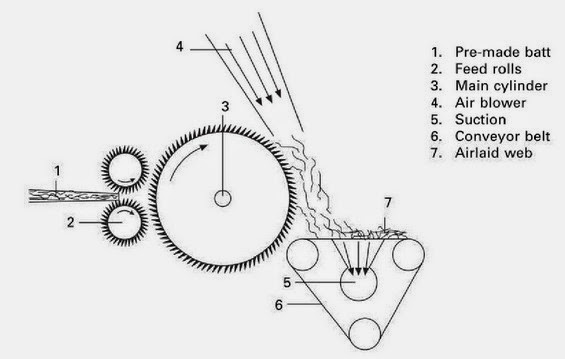
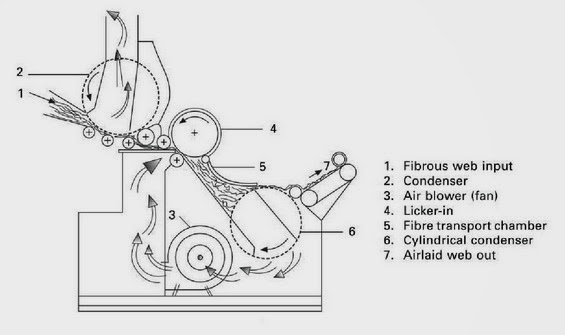
PRINCIPLE OF WEB FORMATION IN A SIMPLE AIR LAYING PROCESS:
RAW MATERIAL: 
  • Natural or man-made textile fibre (cut length >25 mm)
  • Short cut fibres (generally <25 mm)
  • Wood pulp (1.5–6 mm)
Air laid fabric compared with carding technology has these features: 
  • The fibers are oriented randomly on the fabric surface – isotropic structure.
  • Voluminious webs can be produced
  • The range of the area weight is wider (15 – 250 g/m2) but the mass uniformity of light air laid (up to 30 g/m2) is bad.
  • Wide variety of processable fibers
AIR LAID – PRODUCTION PROBLEMS: 
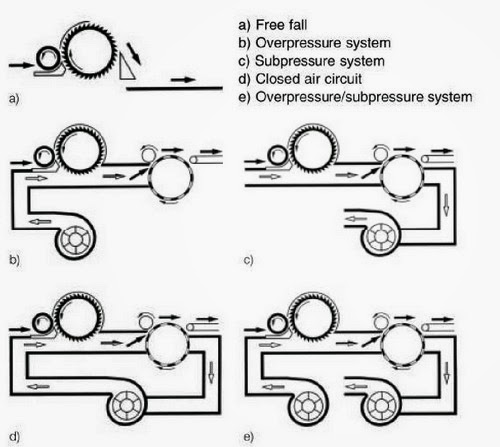
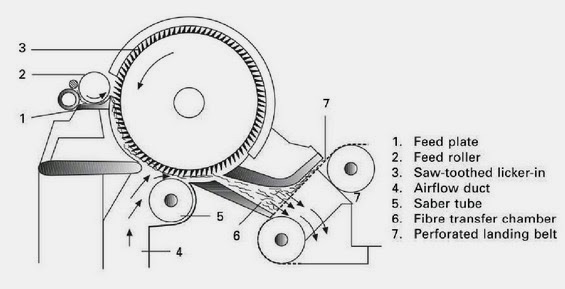
  • Low level of opening fiber material by lickerin roller Thus is suitable to use pre-opened fibers or combine air laid with card machine – Random card machine.
  • Variable structures of web in width of layer due to irregular air flow close to walls of duct . This problem requires high quality design of duct. 
  • Possible entangling of fibers in air stream. This problem can be reduced by increasing the ratio air/fibers which nevertheless means decrease in performance and increase of energy consumption due to high volume of flowing air.
The relation between air flow and performance of device shows the importance of fiber length and fiber diameter. QA is air flow, K is device constant, P is performance of device (kg/hour), L is lenght of fiber staple (m) and D is fiber fineness (dtex).
QA = K.P.L2/D

Thus is suitable to use short fibers for this technology.


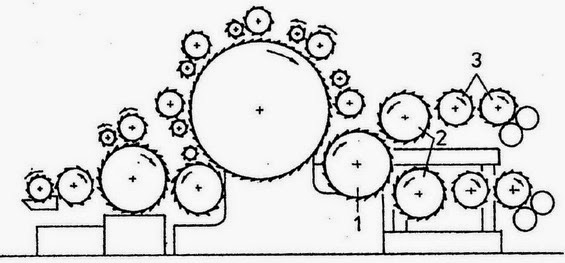
Random cards – combination of air laid and carding technology:
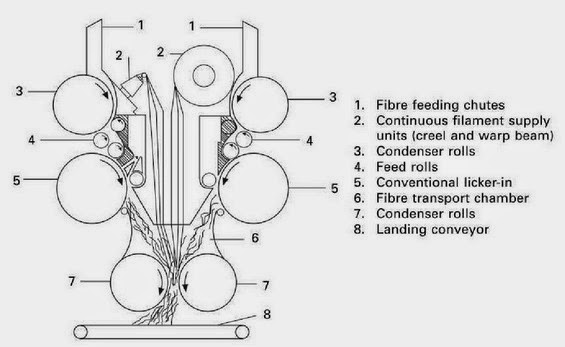
A major objective of this combination is isotropic textile fabric (random orientation of fibers) with good mass uniformity of light fabrics and with high production speed. 
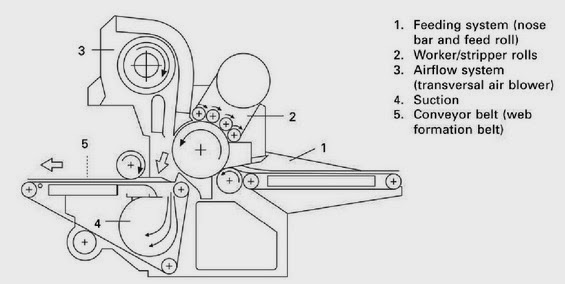
  • The first part – card machine opens perfectly fibrous material so single fibers are as a output.
  • The second part – air laid system uses the centrifugal force to strip the fibers off a roller and. put them down on an air controlled scrim belt.
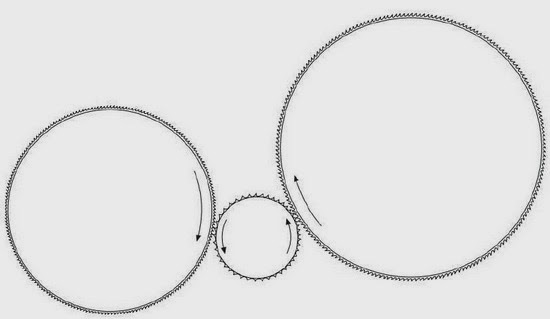
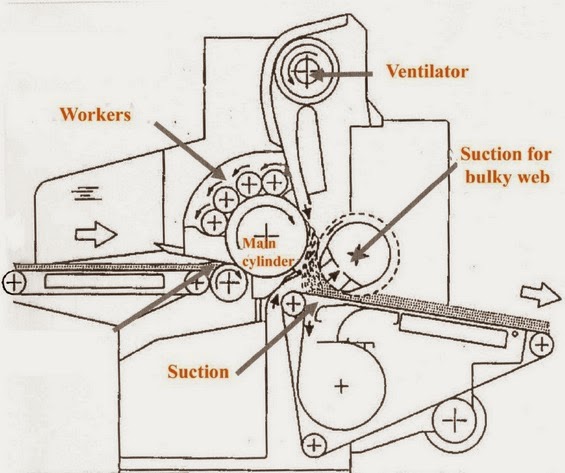
Main variations of random cards I. Airlaid function of random card:
1) Random roller between main cylinder and doffer, which rotate in the opposite direction of the main cylinder.

MAIN VARIATIONS OF RANDOM CARDS:

Main variations of random cards II:
2) Centrifugal force of mean cylinder strips the fibers off.

AIR LAID AND RANDOM CARDS: USED FIBERS: 

Synthetic fibres, viscose, cotton and blends thereof; natural fibres such as flax, hemp, sisal etc.; Reclaimed textile waste and shoddy, cellulose pulp 1.7 - 2000dtex. Max. 120 mm staple length

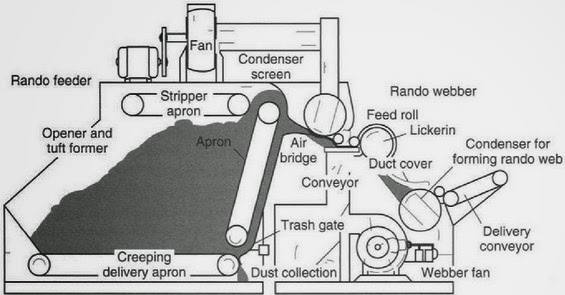
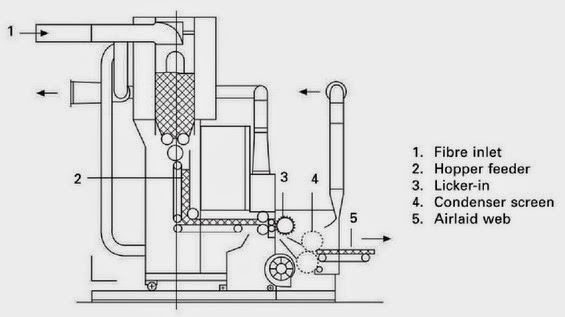
FEEDING SYSTEM OF RANDO WEBBER:

RANDO-WEBBER SYSTEMS WITH PERFORATED SCREEN:
RANDO-WEBBER SYSTEMS WITH CYLINDRICAL CONDENSERS:
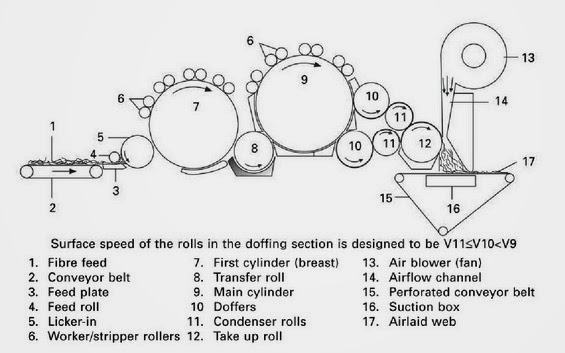
Rando-webber:
  • Relatively narrow widths up to about two metres
  • Webs of 10– 3000 g/m 2
  • Virgin or recycled fibres
  • Filtration, home furnishings, automotive fabrics, insulation and some medical specialities
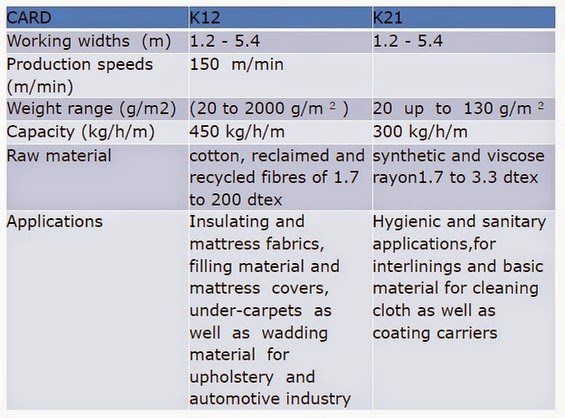
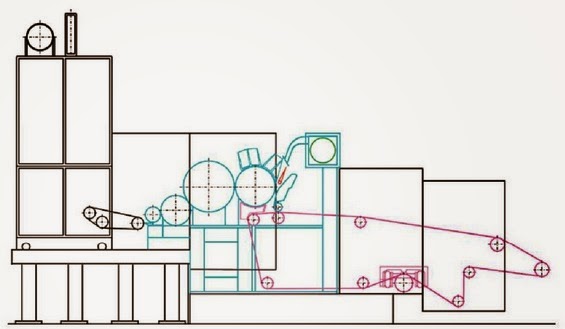
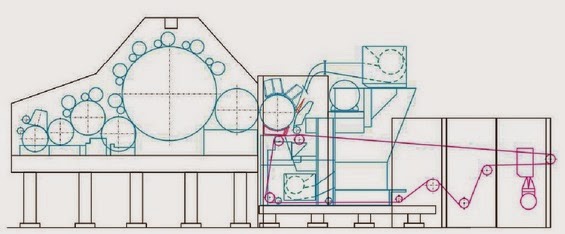
RANDOM CARD K12 OF DR. E. FEHRER:
HIGH-PRODUCTION RANDOM CARD K21 OF DR. E. FEHRER:
  • K12 is more particularly suited to coarse fibres (10–110 dtex), Basic weight range 20– 2000 g/m 2
  • K21 is more particularly suited to synthetic and viscose rayon fibers of (1.7–3.3 dtex), Basic weight range 10–100 g/m 2
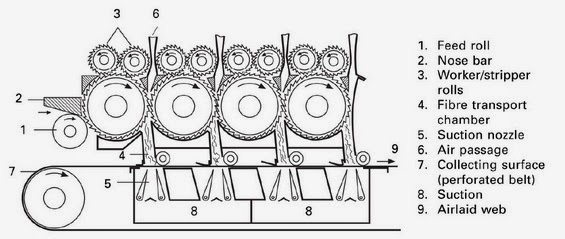
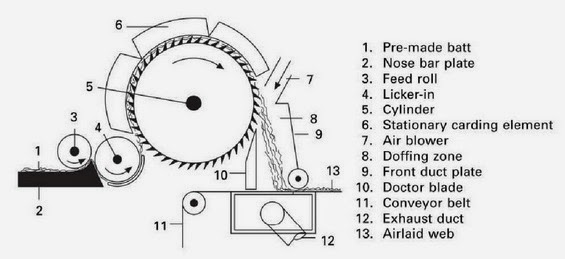
SCHEMATIC VIEW OF THE DOA AIRLAYING SYSTEM:
SCHEMATIC VIEW OF THE AIR LAYING SYSTEM:
CHICOPEE AIRLAYING SYSTEM:
  • Air velocity ( 140 m/s)
  • Surface speed of the cylinder ( 20–60 m/s)
  • Staple fibres ranging from 13–75 mm
SPINNBAU AIRLAYING SYSTEM:
THIBEAU HYBRID CARD AIRLAYING MACHINE:
Thibeau hybrid system: 
  • Typical MD/CD ratio of 1.2–1.5:1
  • Production rate of 200–260 kg/h/m
  • Web weights of 35–200 g/m 2
  • Fibre types cotton, viscose rayon, PET, PP, PA
  • Fibre length of 10–40 mm.
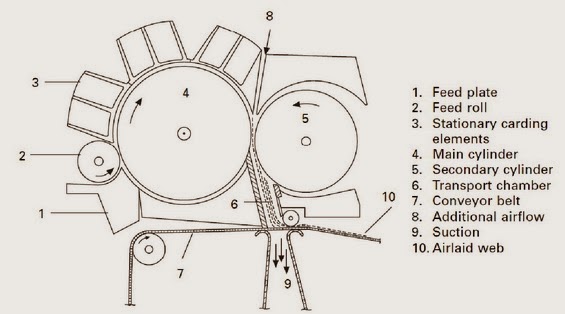
“TURBO-UNIT”
TURBO-CARD RC 2-6 TR:
Turbo-Unit and Turbo-Card: 
  • The turbo-unit TU is either fed by pre-carded webs via a feed plate intake or may be combined with a random card.
  • The turbo-roll is equipped with carding segments.
  • Aerodynamical web-forming by centrifugal force, doffer fan and suction conveyor
  • Lower to medium fibre fineness range
  • Staple length: approx. 10 - 80 mm
  • Web weight: approx. 25 - 450 g/m 2
  • Throughput depending on fibre fineness and fibre type: up to approx. 400 kg/h/m of working width
  • Working widths: up to 4.000 mm
  • Web speed: approx. 20 - 120 m/min
WEB FORMING MACHINE 008-0445 OF LAROCHE S.A.:
Laroche System: 
  • Web weight ranges from 300 to 3000 g/m 2
  • Production speed of up to 10–15 m/min
  • Fibre length should be in the range 20–75 mm
  • Cotton, man-made, glass fibres
  • Hemp, flax, sisal, coconut
  • Bed covers, mats, upholstery and insulation material, carrier material for carpets, industrial and geotextiles as well as furniture textiles
GENERAL PROPERTIES OF AIRLAID FABRICS: 
  • HIGH ISOTROPICITY
  • HIGH LOFT (IF REQUIRED)
  • HIGH POROSITY (95–>99%)
  • HIGH ABSORBENCY AND WICKING RATE
  • SOFT HANDLE
  • ADEQUATE TENSILE STRENGTH
  • GOOD RESILIENCY (COMPRESSION RECOVERY)
  • HIGH THERMAL RESISTANCE.
Air laid and random cards: end products:
  • Chemical bonding: napkins, table cloths and wipes
  • Thermal bonding: nappies (different components, i.e., acquisition layer, distribution layer and absorption core), feminine hygiene/incontinence products and insulation
  • Spunlacing: wet and dry wipes for domestic and industrial applications medical textiles (including disposable gowns, curtains, wound-care dressings, bed sheets), filtration media
  • Needle punching: interlinings and shoe linings, wadding, medical and hygiene products, geotextiles and roofing felts, insulation felts, automotive components, filters, wipes
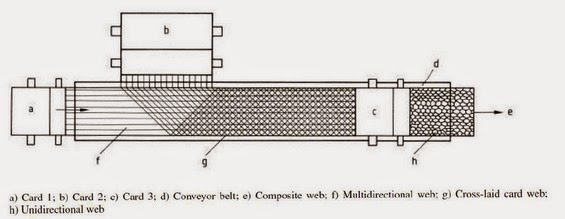
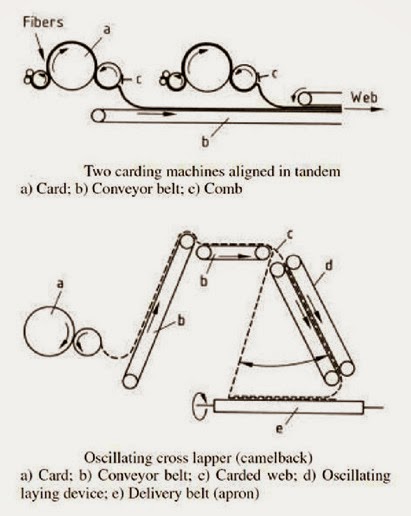
Combination of unidirectional and cross directional web:

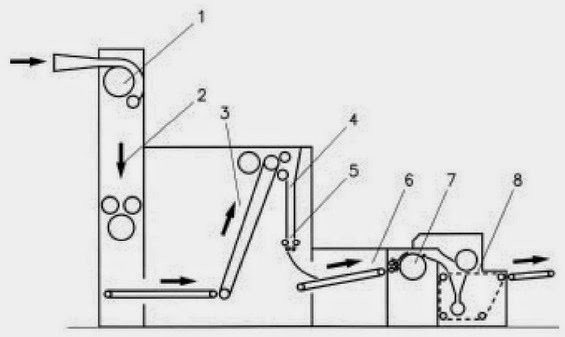
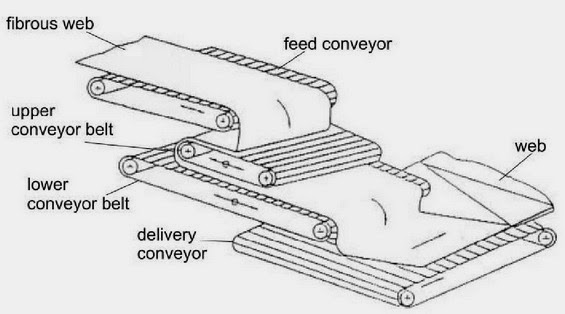
CROSSLAPPER WITH HORIZONTAL LAYING DEVICE:
Tasks of the web-laying machine:
  • Increasing the web mass
  • Increasing the web width
  • Determining the web strength in the length and cross directions
  • Improving the end product quality
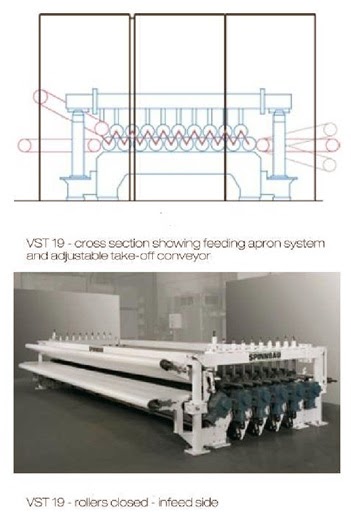
LAP DRAFTER VSTG:
WORKING WIDTH UP TO 7.000 MM. INDIVIDUAL SERVO-DRIVES FOR 4 DRAFTING ZONES WITH INFINITELY VARIABLE DRAFTS. ONLY LITTLE CHANGES OF BATT WEIGHT REGULARITY BY FIBRE RE-ORIENTATION INCREASE STRENGTH IN MD.
MERITS AND LIMITATIONS OF CARD – CROSS LAPPING AND AIR LAYING: